Tribute to Ignacio Agüero at the Las Palmas Festival; documentary filmmaking in an era without “truth” or “certainty”
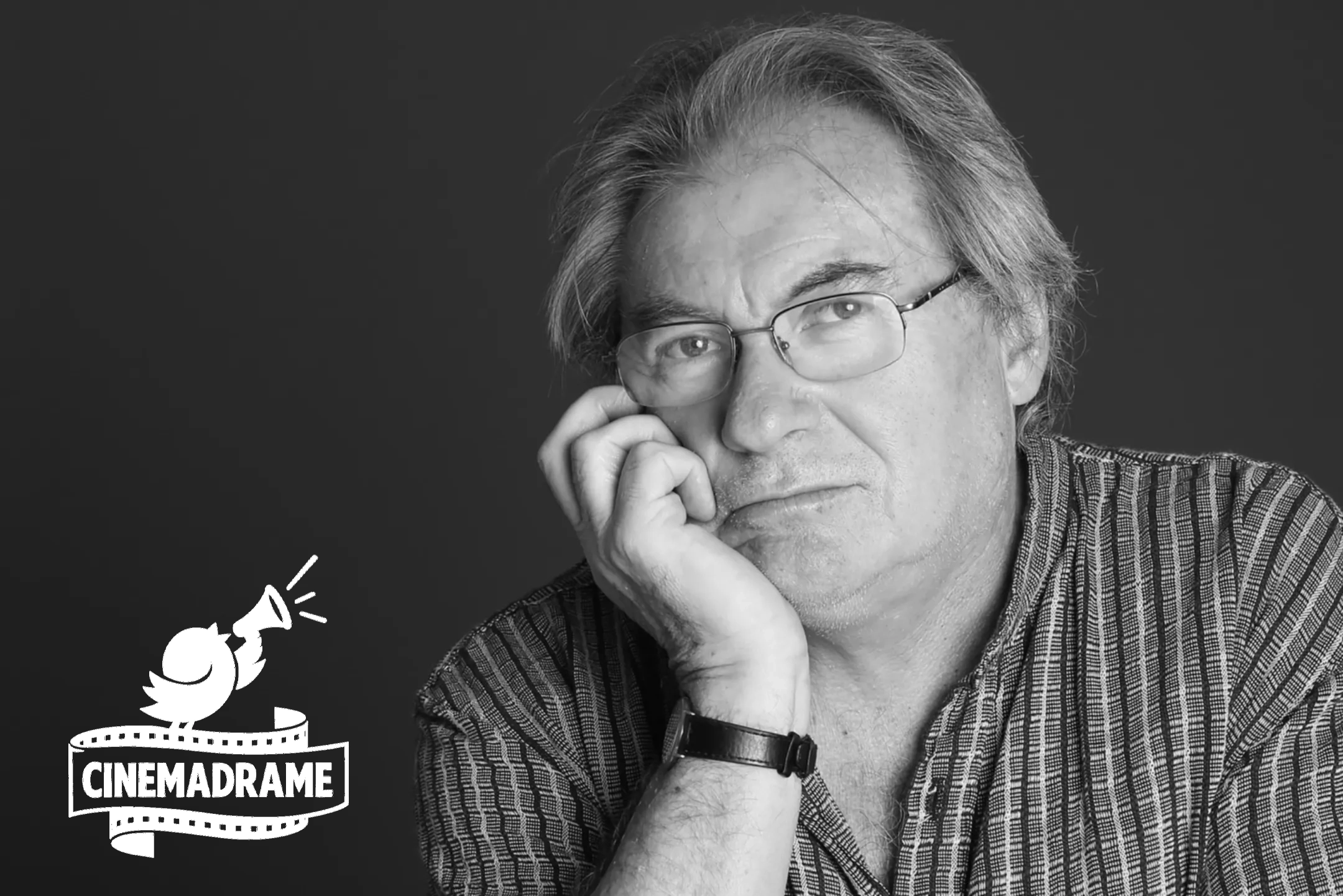
According to the CinemaDrame News Agency, Ignacio Agüero also reflects on his “constant proximity to failure” as a defining condition of his work.
Chilean documentary filmmaker Ignacio Agüero will be honored at the 25th Las Palmas de Gran Canaria International Film Festival, held from April 23 to May 3 on the Spanish island of Gran Canaria.
The tribute celebrates the life and career of the acclaimed, multi-award-winning filmmaker, known for landmark works such as 100 Children Waiting for a Train (1988), The Other Day, As I Love 2 (winner of the Grand Prize at the Marseille Festival in 2016), and Never Climbed the Province (which won the same award in 2019, as well as Best Latin American Film at the Mar del Plata Film Festival).
According to festival programmers, Agüero’s retrospective in Las Palmas will include seven of his films, described as works that hold “a central place in modern Latin American cinema” and that “rewrite the tradition of Chilean political documentary about dictatorship by shifting focus from direct political activism toward reflection on memory and its mechanisms.”
Agüero’s most recent feature, Letters to My Dead Parents (2025), has screened at numerous festivals, including IDFA, DocLisboa, the Marseille Festival, and the Yamagata International Documentary Film Festival, where it received a Special Jury Prize.
Born in Santiago in 1952, Agüero studied architecture before turning to film studies. He graduated shortly after the overthrow of Chilean President Salvador Allende in the military coup led by General Augusto Pinochet—events that shattered the hopes of Agüero and millions of Chileans. Speaking to Variety from his home in Santiago, he recalls: “From a very hopeful period with a bright future… suddenly everything collapsed. Society became a society of violence; extreme violence imposed by the state.” The restrictive laws of the Pinochet era also hindered his early cinematic ambitions: “There was no possibility of making films.”
While many filmmakers left Chile during Pinochet’s dictatorship, Agüero stayed, driven partly by what he describes as a “need to understand what was happening under military rule.” His first film, No olvidar (Don’t Forget), made in secret, recounts the abduction and murder of a father and his four sons, whose bodies were only discovered five years later. In the short documentary, Agüero follows the man’s widow on her weekly walk to the site where the bodies were found—a moving ritual that, according to the director, “somehow described the condition of Chile at that moment.”
His next film marked a turning point in his career. By the 1980s, Agüero was among many filmmakers working in Chile’s growing advertising industry, while still searching for a cinematic voice under the constraints of dictatorship. His response was As I Love It, in which the then-thirty-something filmmaker interviews a group of veteran directors about why they continue making films.
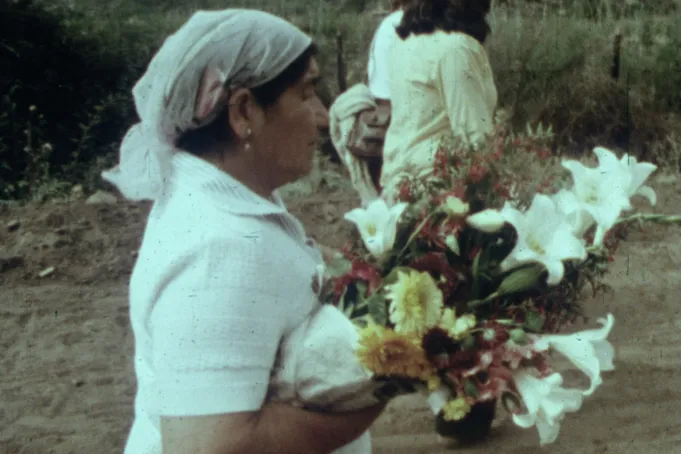
Image source: Courtesy of the Las Palmas de Gran Canaria International Film Festival
The film No olvidar (“Don’t Forget”) was a formative experience for Agüero. He says: “I had no producer. Nothing. No industry existed, not even a single bit of money.” He adds that his situation reflected the reality faced by other Chilean filmmakers at the time: “We wanted to make films and we would do anything for it, but it was very difficult. So we financed ourselves. We were our own producers.” He notes that despite the hardships of filmmaking under Pinochet’s regime, “we were creating our own freedom of action.”
Agüero’s background in advertising ultimately played a key role in helping bring down Pinochet’s rule, when he co-directed a series of short television programs for Chile’s opposition parties ahead of the 1988 referendum that led to the dictator’s removal—a story memorably depicted in Pablo Larraín’s Oscar-nominated historical drama No. With the return of democracy to Chile, filmmakers no longer lived under the shadow of the dictator and his feared secret police. Agüero recalls: “We could film without fear. That was the most important thing—we no longer had any fear in order to work.”
Few of his post-Pinochet films are explicitly political. Instead, they often unfold as a series of conversations—not only between the director and the people he encounters, but also with the spaces they inhabit. He questions our relationship with homes and communities, observing how physical environments both preserve memory and reveal the passage of time.
In Under Construction, or the Place Where I Was Born No Longer Exists (2000), this approach takes shape through conversations with a neighbor witnessing the demolition of an adjacent house. In Never Climbed the Province (2019), the director examines how a new building has transformed his neighborhood, blocking the view of the “Province” hill and the Andes mountains that once defined the landscape.
Agüero says: “Filmmaking is a way of connecting with the world and getting to know it. And that has a derivative in the aesthetic dimension of my films.” He continues: “The films do not want to dictate anything. They are not made to ‘say’ something, as many documentaries do. My documentaries are very far from that approach. They do not want to state something. They only want to create a situation where it is possible to approach reality and allow aspects of it to enter the screen.”
It is an approach that, by his own admission, is not without risk: “I never have any guarantee of success. I may always be standing on the edge of failure.”
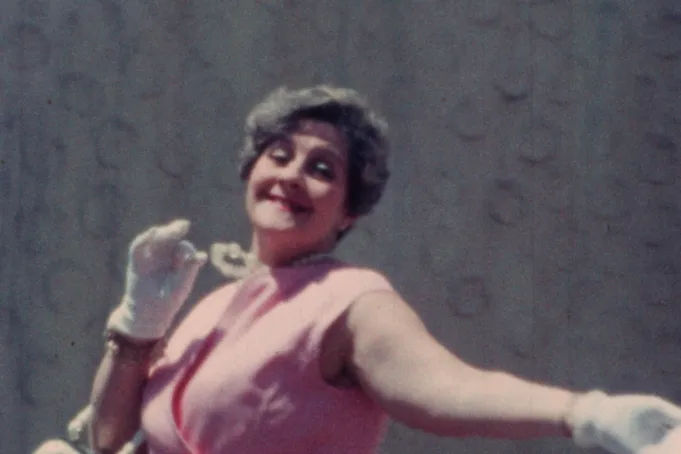
Las Palmas de Gran Canaria International Film Festival
Agüero’s latest film, Letters to My Dead Parents (Cartas a mis padres muertos), weaves together many of the personal and political themes that have shaped the director over nearly five decades of filmmaking. Developed on the eve of the 50th anniversary of Pinochet’s coup, the work links home movies, family photographs, and interviews with people who knew Agüero’s father with archival images of the coup and life under Pinochet’s dictatorship. Using an epistolary structure that gave him “complete freedom” to approach the anniversary in any way he chose, Agüero reflects on what his father might have thought about Chile’s recent history, both for the country and for their family.
Now in his seventies and preparing for another retrospective, Agüero is reluctant to speculate on the future of documentary cinema in such uncertain times. Do the rise of right-wing populism and demagoguery bear unsettling similarities to the Pinochet era? Is documentary filmmaking becoming a vital bulwark against increasing attacks on truth and fundamental freedoms? Agüero remains cautious, though he continues to firmly believe in the modest act of placing a camera and watching the world pass in front of it.
He says: “There is no certainty in anything. Doubt is everywhere. You don’t have leaders. There is no truth. In a way, that allows you to approach the world in a very personal way. You are forced to confront the world personally; and I think that is a good thing for documentary filmmakers.”